Block 02 · 04
The Commodity Market
WTI crude, gold, natural gas, grain: how US commodity markets work and why they matter to investors.
A commodity price forms where three factors meet: how much is produced, how much is needed and how much sits in storage. Change the factors and watch the explanation change.
Inventory follows automatically: more supply and less demand means stocks build up.
There is less of the commodity than buyers need and inventories are drawing down — in that setup price usually gets upward pressure.
The point is the mechanism: supply, demand and inventories together create pressure on price. This is not a forecast of a specific move and not a guarantee of direction.
Educational example. Not investment advice and not a price forecast.
In plain words
Take WTI crude oil. A standard exchange contract covers 1,000 barrels delivered in Cushing, Oklahoma. A refiner buys that contract in advance to lock in its fuel costs for the coming quarter, while a producer sells it to know its revenue ahead of time. Both sides gain certainty. An investor takes part in the same contract and earns on the price difference, closing the position before the delivery date — the physical barrels never reach them.
The commodity market is trading in what the real economy is made of: oil, gold, natural gas, copper, grain. Everything factories process and producers buy.
How it works. Airlines, oil refiners, and food manufacturers lock in commodity prices in advance so they can plan their budgets accurately. Investors take part in the same contracts and earn on price moves without ever handling physical delivery.
Why commodities are interesting. Their prices depend on different factors than stock prices do — production volumes, weather, industrial demand, warehouse inventories. It's a separate source of return that lives by its own logic.
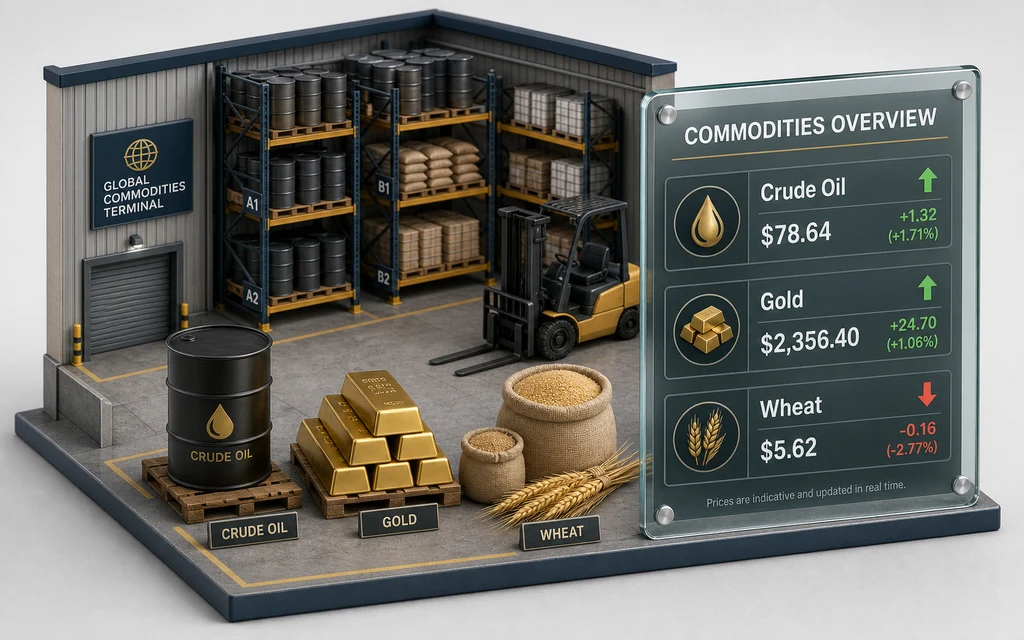
Key instruments in the US market. — the American oil benchmark. Gold — an asset that has preserved purchasing power for centuries. Natural gas and copper — direct gauges of industrial activity.
Try it yourself
WTI crude: what a price move gives on the amount in the trade
Risk management — 20% of $50,000 in the trade: $10,000
+$0
The trade holds $10,000, position $50,000 at x5 leverage.
Size first: 20% of capital goes into the trade, leverage scales the position, the rest stays in reserve. EIA inventory reports explain why the price moves in the first place.
Common beginner mistakes
- Thinking a futures contract requires accepting physical delivery — positions close before that
- Overlooking contract size: 1,000 barrels is not 1 barrel
- Ignoring the calendar of EIA data and OPEC+ meetings
- Judging commodities by stock-market logic — here, inventories, production, and weather matter