Block 04 · 07
Metals Reports: Exchange Warehouses and Where Demand Is Going
Exchanges publish how much gold, silver and copper sits in their warehouses. The movement of those stocks shows who is buying the metal — central banks or industry — and what the market is preparing for.
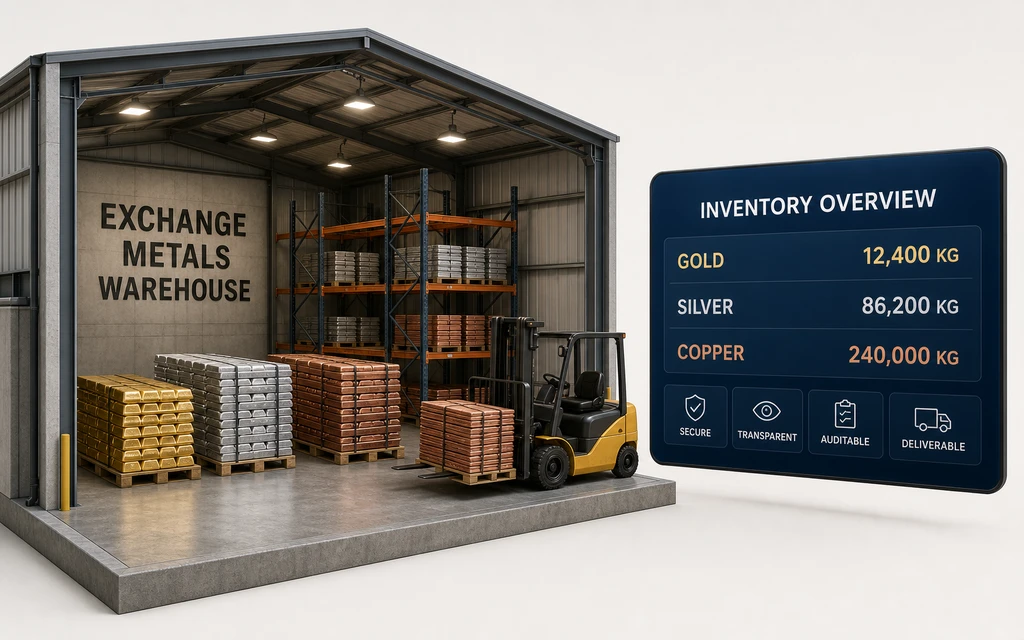
Central banks and sovereign funds: metal leaves exchange warehouses for national vaults.
These buyers do not speculate. They shift part of their reserves from currency into metal when they expect a weaker dollar or faster inflation.
A steady outflow of gold from warehouses alongside a rising price is defensive demand, not a one-off trade.
In practice: you watch inventory reports and central bank purchase data, not the gold price. Demand shows up in the numbers before it shows up on the chart.
Educational example on illustrative data, not a return forecast
Drawing the chart…
Animation starts on scroll
Teaching example on illustrative data, not a return forecast
A metal's price forms where three factors meet: supply, demand and exchange inventories. A change in any of them changes how tight the market is.
Price may find support
- 01
Less metal is readily available
- 02
With steady demand the market becomes tighter
- 03
Price may find support
Who creates the demand
Vehicle production uses copper, aluminium and precious metals in wiring and catalysts.
Rising activity in this sector may increase demand for the related metal.
Economy → sectors → demand → inventories and supply → price
The scenarios are hypothetical and show the mechanism, not a price forecast. This is not investment advice.
In plain words
Picture a port warehouse everyone can watch through a glass wall. In the morning you see that eighteen percent of the gold left this week, and the recipient is a state vault — so the country is positioning for a weaker currency. In the next bay a quarter of the copper left, and the trucks went to cable plants — so production is expanding and the orders are already signed. Nothing was announced, the inflation and industrial reports are not out yet, but the metal has already moved. Warehouse numbers let you see a large-capital decision at the moment it is made, not when it is written about.
What the report is
All exchange metals are stored in its warehouses. The exchange regularly publishes how much gold, silver, copper and aluminium is there. The change in those numbers shows whether metal is being taken out or delivered back.
The simple logic
- Stocks shrink — the metal is being bought, demand is strong.
- Stocks grow — the metal is not needed, demand is weak.
The interesting part is who buys
- Gold is taken by central banks. Governments move part of their reserves into metal, usually when they expect inflation to rise or the dollar to weaken. They prepare early.
- Copper is taken by industry. Plants need copper: wiring, power grids, electric vehicles. If copper stocks shrink, companies are scaling production right now.
- Silver is taken by both. It is a defensive asset and an industrial metal at once.
How to use it
Once the numbers are out you ask one question: where is the buying going. The answer shows what the market is preparing for long before it reaches the news. From there you review the idea with a specialist and set the size.
Common beginner mistakes
- Watching only the metal price and ignoring warehouse reports
- Judging stocks on a single day instead of the monthly trend
- Failing to distinguish the buyer: central bank and industrial demand have different horizons
- Applying equity logic to metals: contracts have their own sizes and tick values
- Reacting to the number after the fact although the publication calendar is known in advance