Block 01 · 04
Capital Security Architecture
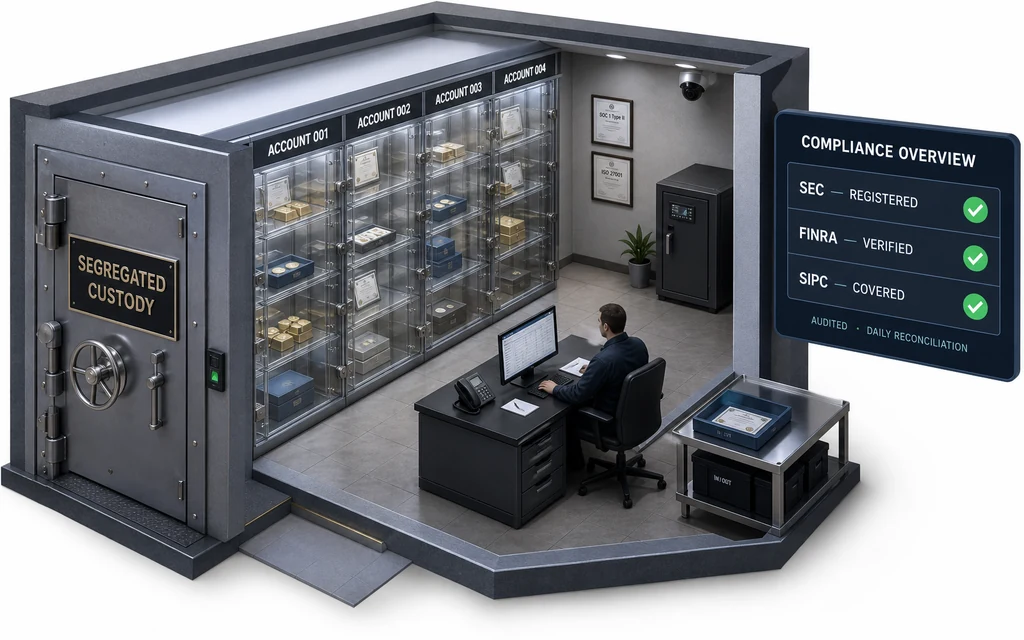
SEC and FINRA licenses, segregated accounts, independent clearing, and SIPC coverage up to $500,000: Private Banking infrastructure where every dollar stays under your 100% control.
In plain words
It's the difference between a safe guarded by someone's word and a bank vault: what protects you here isn't promises but walls — regulator licenses, an account in your name, an immutable trade ledger, and government insurance on top.
Why this is reliable
urity here rests on infrastructure, not on words. You operate inside the same system family offices and large financial institutions use to manage capital.
What the license means
The company works under SEC and government licenses. That means continuous audit and direct legal accountability to regulators. The statuses are public: they appear in government registries and anyone can verify them in a couple of minutes.
Where your money sits
- Funds and securities are not on the company's balance sheet — they are in segregated accounts and belong to you personally.
- Every trade is logged immediately in independent clearing and cannot be altered after the fact.
- Assets in the brokerage account are protected by — up to $500,000.
What the company does
It processes market data, corporate earnings, and Federal Reserve decisions and turns them into a finished personal strategy for your objectives. In practice you get Private Banking infrastructure: maximum protection of the environment and maximum return on capital.
Control over the money stays entirely with you — the company is responsible for expertise and security.
Common beginner mistakes
- Judging a firm by promises and names instead of checking licenses in government registries
- Treating a license as a formality — it is continuous audit and legal accountability
- Not distinguishing the company's balance sheet from a segregated account held in your name
- Ignoring clearing: it is what makes the trade history immutable
- Confusing SIPC coverage ($500,000 if the broker fails) with insurance against market losses